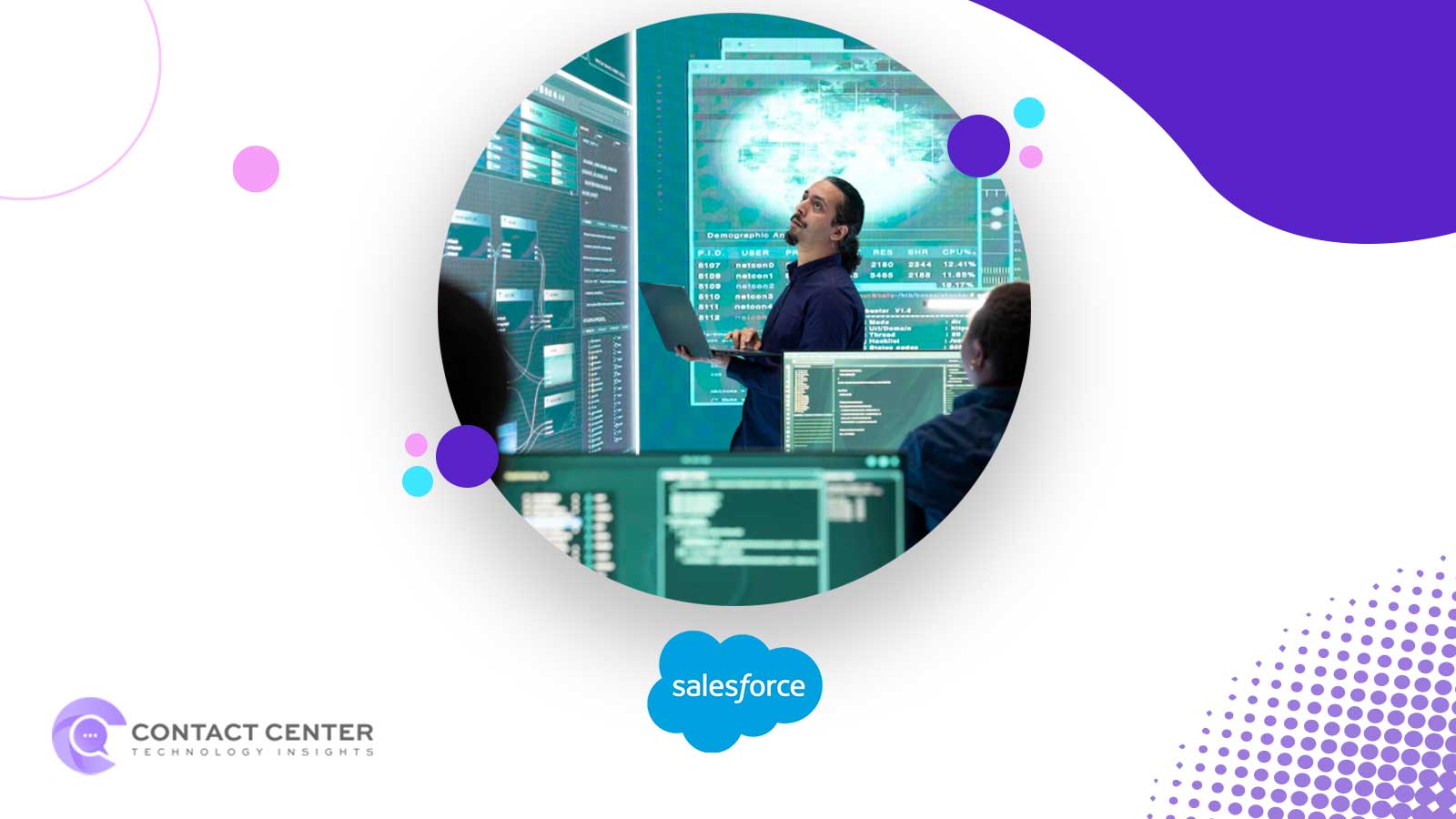
Salesforce Inc. has unveiled a new set of deep observability tools designed to address the rising need for effective oversight, management, and maintenance of AI agents after they go live. These new capabilities are built into the Agentforce 360 Platform, Salesforce’s enterprise-wide environment that integrates AI agents across nearly every application in its ecosystem. With Agentforce 360, organizations can deploy large networks of AI agents capable of working in tandem with human teams or collaborating autonomously with other AI agents to complete tasks more efficiently.
This release marks another milestone in Salesforce’s broader strategy to equip enterprises with the infrastructure required to build, expand, and manage agent-based systems at scale. Adam Evans, executive vice president and general manager of Salesforce AI, emphasized the shift happening across the enterprise space. He stated, “As AI adoption accelerates, the biggest enterprise challenge will no longer be about building an organization’s first agent; it will become how to best manage a fleet of agents that are making real-world business decisions.”
Salesforce noted that monitoring agentic workflows and understanding agent behavior is becoming increasingly essential. As AI systems operate more autonomously, companies are integrating them into core workflows with limited human intervention. Salesforce’s findings highlight this trend, reporting a 282% surge in enterprise AI adoption. Evans reinforced the importance of visibility, noting, “You can’t scale what you can’t see.”
The observability update focuses on three core pillars: refinement, traceability, and reliability. To support these, Agentforce 360 introduces a new session tracing data model that records every interaction in detail—including user inputs, agent responses, reasoning chains, LLM calls, and guardrail checks. This model integrates with MuleSoft Agent Fabric, a new centralized system for orchestrating, governing, and monitoring every AI agent across the organization.
With advanced analytics, companies can examine agent performance, track usage trends, evaluate KPIs, and uncover efficiency gains by analyzing conversational flows. Teams can refine agent performance by grouping similar interactions to identify recurring patterns and reviewing configuration settings that influence agent decisions.
Large-scale health monitoring enhances operational reliability by providing near-real-time metrics on continuously updated dashboards. This persistent monitoring helps organizations detect and address issues before they escalate and impact outcomes.
Early pilot customers have already begun experiencing the benefits. Companies reported increased transparency, improved governance, and greater control over autonomous workflows—particularly helpful in uncovering what often operates as a “black box.” Salesforce tested the tools with organizations such as 1-800Accountant, Hotel Engine Inc., and Nexo Inc.
Hotel Engine, which manages more than 530,000 customer inquiries annually, shared that the observability tools offered deep insights into not only whether tasks were completed successfully but also how AI agents made decisions. Demetri Salvaggio, vice president of customer experience and operations, emphasized, “Observability is the foundation that turns AI from a tool into a trusted, continuously improving teammate.”
Salesforce confirmed that agent analytics and optimization features are now available through Agentforce Studio, the centralized dashboard for Agentforce 360. Health monitoring capabilities will roll out broadly in spring 2026.
To join our expert panel discussions, reach out to info@intentamplify.com
Recommended News