Hyper‑personalized CX is an AI‑powered approach that delivers bespoke experiences for every customer. This article will walk you through what hyper‑personalized CX looks like, why it's emerging in contact centres now, and how leaders in the U.S. and beyond are making it real.
Why Hyper‑Personalized CX matters in contact centres
The market for call‑centre AI is booming: the global call‑centre AI market was estimated at USD 1.99 billion in 2024, with projected growth to USD 7.08 billion by 2030 at a CAGR of 23.8%.
Within this, Hyper‑personalized CX, where AI leverages data, context, and customer history to tailor interactions, is becoming a defining competitive advantage.
How AI enables Hyper‑Personalized CX
From data to personalized journeys
In a modern contact centre, AI doesn’t just automate; it anticipates. With tools like predictive analytics and sentiment detection, AI can map out customer behaviour and craft relevant responses.
An agent‑assist AI identifies that a long‑time customer is calling after late payments, flags the context, and suggests a loyalty‑based resolution. Such personalized journeys lie at the heart of hyper-personalized CX.
Human‑AI collaboration
Some might imagine a fully robotic support floor, but that’s not the story. Research shows that more than 80% of contact‑centre leaders are investing in generative AI or expect to in the near term.
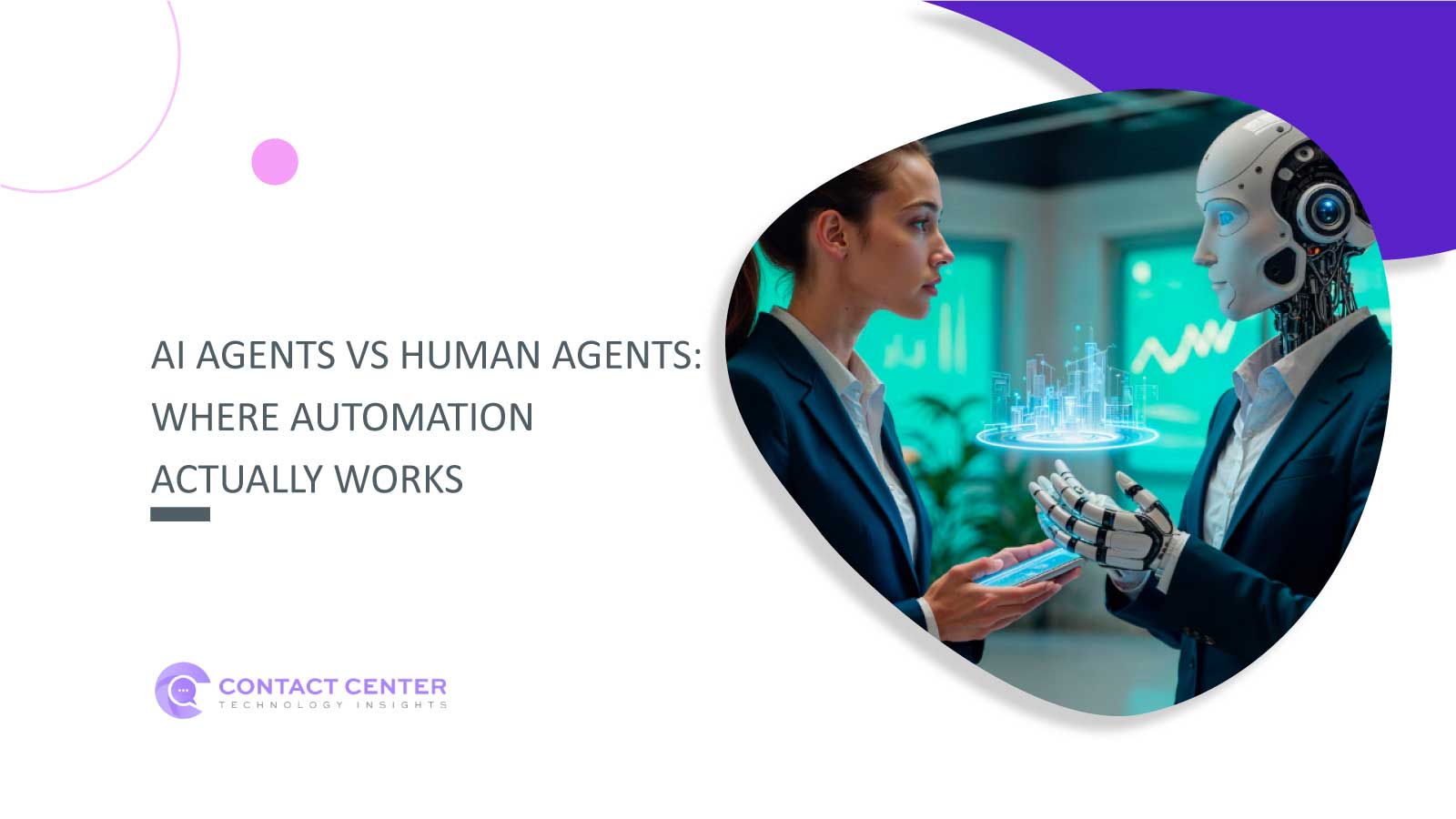
Yet, the best outcomes happen when AI handles routine flows (authentication, routing) and human agents focus on nuanced, high‑value interactions. That interplay underpins effective Hyper‑Personalized CX.
Putting it into action – where the impact shows
The 2024 benchmark study by Replicant analysed over 46,000 minutes of real calls and found that every interaction included at least one authentication or routing flow, an ideal candidate for AI automation.
By automating those flows, contact centres free up agents to focus on deeper customer engagement. That’s a foundation for Hyper‑personalized CX: not just faster service, but smarter service.
Real‑world examples of Hyper‑Personalized CX
Case Study: Banking
A bank replaced its classic rules‑based chatbot with a generative AI tool. Within seven weeks, the new system answered customer queries 20% more effectively than the old tool. Beyond speed, the system had richer context, recognising customer tone, past behaviour, and service history, elements central to Hyper‑personalized CX.
Sector Boost: Marketing
Even outside pure contact centres, marketers report that AI‑driven personalisation can deliver up to a 25% lift in ROI and up to 1.7× higher conversion rates.
While this is a marketing stat, the principle holds: tailoring interactions at scale drives results, and contact centres are now applying the logic for service, support, and retention.
Key considerations for leaders implementing Hyper‑Personalized CX
Start with use‑cases
Not every interaction needs full personalisation. Focus first on high-volume or high‑value flows: authentication, routing, and account updates.
Data, privacy, and trust
Personalisation depends on data. Organisations must ensure transparent handling, clear consent, and strong governance. Building trust is essential if Hyper‑personalized CX is going to scale.
Align technology and people
A sobering note: according to Boston Consulting Group, 74% of companies still struggle to scale AI value. For Hyper‑personalized CX to succeed, it demands not just tech but workflow redesign, agent training, and organisational alignment.
Measure the right outcomes
Traditional KPIs (call‑time, handle‑time) matter. But for Hyper‑personalized CX, metrics such as first‑contact resolution, customer sentiment, and repeat contact rate become even more salient. Leaders should track how personalization impacts engagement, loyalty, and lifetime value.
What’s next: The future of Hyper‑Personalized CX
Looking ahead, we will see deeper context‑driven interactions: AI will bring customer history, emotional cues, and predictive intent into every support channel. Agents might receive real‑time prompts with tailored conversation suggestions, making the interaction feel truly bespoke. That is where Hyper‑personalized CX evolves from concept to standard.
For U.S.‑based tech leaders and service organisations targeting innovation, embracing hyper‑personalized CX is no longer optional; it’s rapidly becoming table stakes.
Conclusion
In a world where customers expect frictionless, personalized experiences, contact centres must move from generic to customised at scale. Hyper‑personalized CX offers that promise: AI‑driven insights, human‑agent collaboration, and workflow redesign converging to delight customers and optimise operations.
Stay Ahead of the AI Curve. Join thousands of CX leaders who get fresh insights on AI,
automation, and contact center transformation, straight from the experts.
Subscribe or Explore More at ContactCenterTechnologyInsights.com