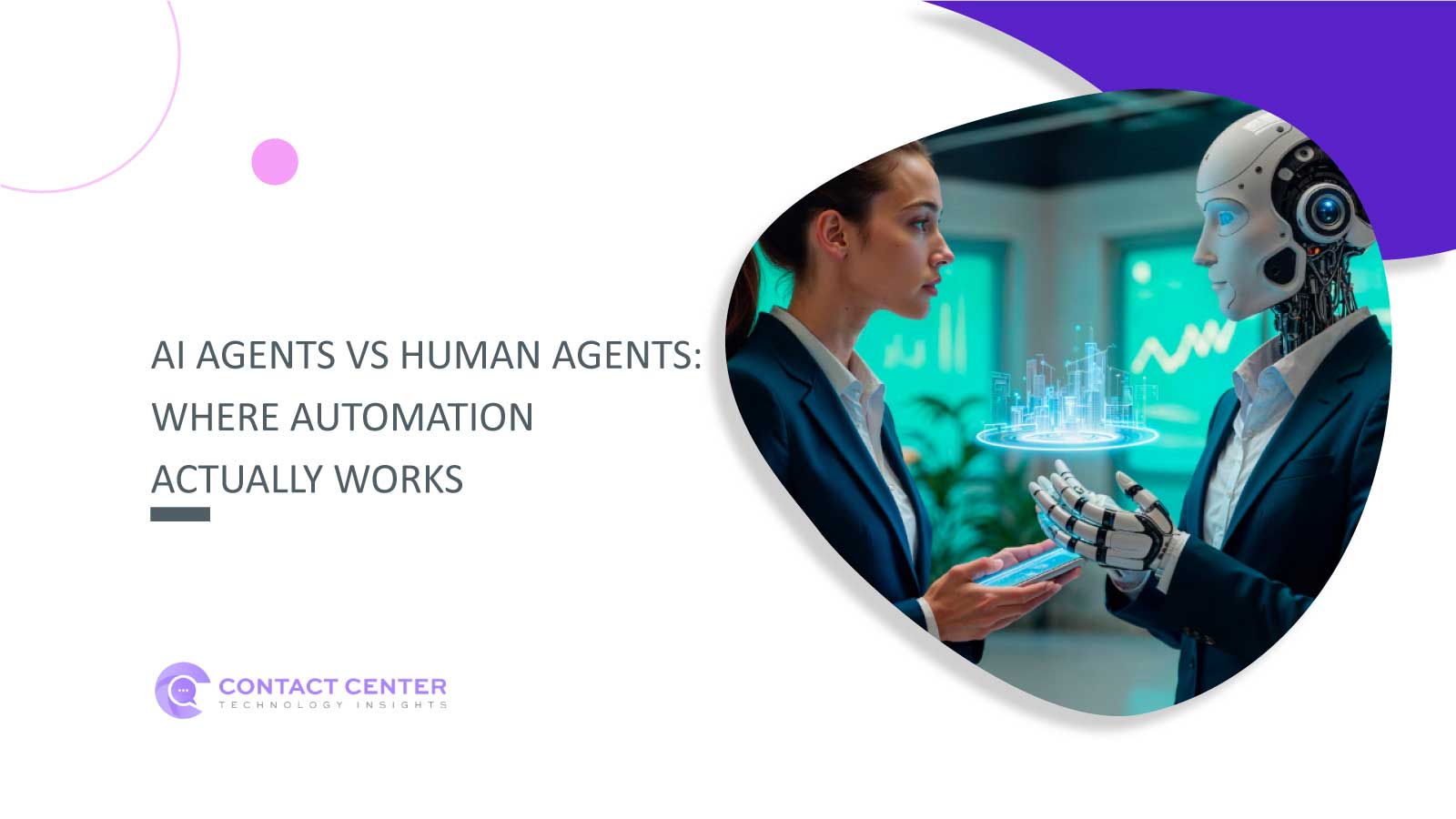
In today’s contact-center landscape, service organizations face mounting pressure to deliver faster resolution, personalized experiences, and efficient operations, all while controlling costs. It is within this dynamic environment that Salesforce Agentforce has emerged as a powerful enabler of transformation, helping contact centers move from reactive, agent-intensive models to proactive, automation-driven service orchestration.
Below I draw on extensive industry research, leading-edge deployment insights, and executive-level discussions to illustrate how Agentforce is changing the game and what contact center leaders must do to ensure meaningful value.
The challenge: Contact centers under strain
The context confronting service leaders is significant. According to research from Salesforce, 80% of decision-makers expect increased case volume in the near term, while 80% also anticipate rising budgets and 76% foresee headcount expansion to meet demands.
At the same time, consumers are expecting seamless experiences: nearly 60% prefer to use fewer touchpoints to complete tasks, and 69% expect consistent interactions across departments. Simply scaling human staff is no longer a sustainable route, given cost pressures, talent constraints, and speed expectations.
That makes the case for automation, smart routing, and self-service stronger than ever. But traditional automation often falls short when it comes to handling nuanced queries, preserving context, or orchestrating across channels. Many contact centers process inquiries on legacy systems or disjointed workflows, which results in longer wait times, fragmented journeys, and higher cost per contact.
Enter Agentforce: a new service-automation paradigm.
Agentforce is not just another bot or script engine. Instead, it is a purpose-built service automation framework from Salesforce that enables intelligent, autonomous agents, tightly integrated with CRM, knowledge bases, and enterprise data, to operate across the service lifecycle.
Key differentiators that matter for contact centers include:
Grounding in trusted data: Agentforce leverages the Salesforce Data Cloud to unify customer records, metadata, historical cases, and service knowledge. This means the agents operate with context, not speculative assumptions.
Autonomous orchestration plus human hand-off: The system handles routine, high-volume tasks, guides agents with real-time information, and when needed escalates to human teams. In one study, Salesforce identified that organizations resolving 85% of queries via Agentforce achieved meaningful gains in efficiency.
Rapid deployment and built-in templates: With pre-built topic libraries, standard agent types, and drag-in flows, contact centers can stand up initial capabilities in weeks rather than months.
Visibility, compliance, and optimization: Agentforce now includes an “Agentforce Optimization” module, enabling administrators to monitor agent performance at a granular level (sessions broken into “moments”) so that contact center management can fine-tune performance and quality.
Measurable impact: what the data tells us
For a contact center organization, proof of impact is everything. The following data points draw from Salesforce and independent sources, offering a lens into how Agentforce is driving value:
Service teams using automation report cost reductions of 92%.
On Salesforce’s own platform, Agentforce handled over one million support moments and projected annualized savings of US$50 million.
Organizations have reported resolving as many as 85% of customer queries via Agentforce without human intervention.
The market for “customer-service agents” (autonomous agents) is estimated to grow from US $5.1 billion in 2024 to US $47.1 billion by 2030.
In service environments, deploying the automation built on the Service Cloud platform has delivered cost savings of around 27%.
These metrics reflect real improvements in efficiency, resolution speed, and cost-effectiveness. For contact center operations, that translates into fewer routine contacts, smoother agent workflows, and improved customer experience.
Strategic levers: making Agentforce work for your contact center
Introducing a platform like Agentforce is more than a technology shift; it requires operational, data-governance, and cultural readiness. Below are five key levers that senior contact center leaders should focus on.
Data readiness and unification
An automation strategy without a data framework is just a wish list. Many contact centers struggle because customer data is siloed across channels, systems, or departments. Agentforce demands unified, harmonized data sets so that agents act on accurate context. Organizations should prioritize cleaning duplicate records, harmonizing metadata, and ensuring real-time data flows.
Define automation-appropriate use cases.
Start with high-volume, lower-complexity inquiries, such as status updates, scheduling, and knowledge responses, and then scale to more complex orchestrations. The standard-agent templates within Agentforce support this phased approach.
Embed guardrails and escalation logic.
While automation can manage a large share of contacts, human agents must remain connected to handle exceptions. Agentforce supports seamless hand-offs and escalation paths to maintain service quality.
Measure and optimize continuously.
The Agentforce Optimization module offers visibility into agent-customer interactions by breaking sessions into “moments” for analysis. Contact-center leaders should track quality scores, identify misrouted topics, flag recurring questions, and adjust workflows accordingly.
Invest in agent experience and change management.
Automation should not be seen as “bots replacing agents” but rather “bots empowering agents.” Human teams will shift to higher-value work, dealing with complex issues, creating differentiating service, and focusing on relationship-building. Leadership must manage change, provide training, and reinforce the new operating model.
What this means for the contact center of the future
With Agentforce (and comparable platforms) now mainstream, contact centers are evolving in several profound ways:
Focus shifts from pure volume-handling to interaction outcome: When agents are freed from repetitive contacts, they can spend time on fewer, more meaningful interactions.
Service becomes more proactive: With unified data and autonomous agents, service teams can anticipate issues, route proactively, and reduce customer effort.
Cost models change: Reduction in routine contacts, fewer manual touches, and faster resolution drive lower cost-per-contact and better marginal economics.
Experience becomes differentiating: According to the research, 69% of consumers expect consistent interactions across departments; automation helps deliver that by synchronizing context and routing.
Operational agility improves: With modular agent templates, contact centers can spin up new workflows (e.g., surge handling, seasonal campaigns) faster than before, giving them a competitive edge.
In short, where many contact centers have been cost centers operating under heavy human loads, the next-generation operation is a hybrid of human and digital labor orchestrated in real time, driving service excellence and operational discipline.
If you lead a contact-center function and are evaluating how next-generation service automation can accelerate transformation, I encourage you to explore what Agentforce can deliver.
Empower your contact center team with actionable insights that drive measurable results.